
role of solder masks in Pc board assembly
In the complex world of PC board assembly, solder masks play a pivotal role in ensuring the integrity, reliability, and performance of electronic devices. Solder masks are thin layers of polymer resin applied to the surface of PCBs to protect copper traces, pads, and vias from oxidation, contamination, and unintended solder bridging during assembly. In this article, we delve into the multifaceted role of solder masks in PC board assembly and highlight their importance in achieving high-quality soldering results.
One of the primary functions of solder masks is to prevent solder bridging and short circuits during the soldering process. Solder masks are applied to the surface of PCBs to cover and insulate copper traces and pads, leaving only the desired soldering areas exposed. By creating a barrier between adjacent soldering points, solder masks prevent solder from flowing across the surface of the pc board assembly and forming unintended bridges or shorts between conductive elements. This helps ensure proper electrical isolation and prevents reliability issues associated with solder bridging, such as electrical shorts and malfunctioning circuits.
Furthermore, solder masks provide protection against oxidation and contamination of copper traces and pads, ensuring reliable solderability and long-term performance of PCBs. Copper is susceptible to oxidation when exposed to air or moisture, which can compromise solder wetting and adhesion during assembly. Solder masks act as a protective barrier, shielding copper surfaces from environmental factors and preventing oxidation and contamination that could impede solderability. This helps ensure consistent soldering quality and reliable electrical connections, particularly in high-reliability applications where long-term performance is critical.
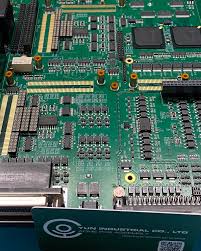
What is the role of solder masks in Pc board assembly?
Moreover, solder masks help improve assembly yield and reduce rework by providing visual contrast and alignment cues for component placement and soldering. The contrasting color of solder masks against the PCB substrate makes it easier for operators and automated assembly equipment to identify component locations, alignment marks, and soldering areas during the assembly process. This facilitates accurate and efficient component placement, reduces the risk of misalignment or misplacement, and minimizes the need for rework or touch-up soldering, improving overall assembly yield and productivity.
Additionally, solder masks contribute to the overall durability and reliability of PCB assemblies by providing mechanical protection and insulation for copper traces and pads. Solder masks help prevent mechanical damage, abrasion, and physical stress on copper features during handling, assembly, and operation, reducing the risk of electrical opens, shorts, or damage to the PCB. Additionally, solder masks provide electrical insulation between adjacent copper features, preventing unintended electrical connections and ensuring proper functionality and reliability of electronic circuits.
Furthermore, solder masks play a crucial role in improving the aesthetic appeal and manufacturability of PCB assemblies. Solder masks are available in a variety of colors, including green, blue, red, and black, allowing manufacturers to customize the appearance of PCBs to meet specific design or branding requirements. Additionally, solder masks provide a smooth, uniform surface finish that enhances solderability and solder joint quality, contributing to the overall manufacturability and reliability of PCB assemblies.
In conclusion, solder masks are essential components of PC board assembly that serve multiple critical functions, including preventing solder bridging, protecting against oxidation and contamination, improving assembly yield and productivity, enhancing mechanical durability and reliability, and improving the aesthetic appeal and manufacturability of PCB assemblies. By providing electrical insulation, mechanical protection, and visual contrast, solder masks ensure the integrity, reliability, and performance of electronic devices, driving excellence and innovation in PC board assembly processes.
