
flexible circuit board manufacturers
Flexible circuit boards, also known as flex PCBs, have gained widespread popularity for their ability to bend, twist, and conform to complex shapes, making them ideal for applications where space constraints and design flexibility are paramount. One of the key advantages of flexible circuit boards is their thinness, which allows for compact and lightweight electronic devices. In this article, we delve into the capabilities of flexible circuit board manufacturers in achieving remarkable levels of thinness in their products.
The thickness of flexible circuit board manufacturers can vary depending on factors such as the type of substrate material, the number of layers, and the complexity of the circuit design. Traditional rigid PCBs typically have a thickness ranging from 0.6mm to 1.6mm, whereas flexible circuit boards can be significantly thinner, often measuring in the range of micrometers to a few millimeters. Manufacturers leverage advanced fabrication techniques and specialized materials to achieve ultra-thin profiles while maintaining the required mechanical and electrical performance characteristics.
One of the primary factors influencing the thinness of flexible circuit boards is the choice of substrate material. Flexible circuit boards are typically constructed using flexible polymer substrates such as polyimide (PI) or polyester (PET), which offer excellent flexibility, thermal stability, and dielectric properties. These materials can be manufactured in ultra-thin films with thicknesses as low as tens of micrometers, allowing for the production of extremely thin and lightweight flex PCBs.
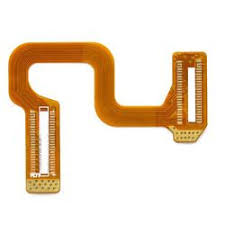
How thin can flexible circuit board manufacturers be made?
Furthermore, manufacturers employ innovative manufacturing processes such as laser ablation, chemical etching, and thin-film deposition to achieve precise control over the thickness of flexible circuit boards. Laser ablation, for example, allows manufacturers to selectively remove material from the substrate to create fine circuit traces and features with high precision. Chemical etching techniques can be used to etch away unwanted copper or substrate material, further reducing the thickness of the flex PCB. Thin-film deposition methods enable the deposition of conductive and insulating layers with nanoscale thicknesses, facilitating the creation of ultra-thin multilayer flex PCBs.
In addition to substrate material and manufacturing processes, the number of layers in a flexible circuit board also impacts its thinness. Single-layer flex PCBs, which consist of a single conductive layer sandwiched between two substrate layers, are inherently thinner than their multilayer counterparts. However, advancements in fabrication technologies have enabled manufacturers to produce multilayer flex PCBs with increasingly thin profiles by reducing the thickness of individual substrate layers and optimizing the stacking sequence of conductive and insulating layers.
Moreover, the demand for ultra-thin flexible circuit boards has driven manufacturers to innovate and develop new materials and processes to push the limits of thinness even further. For example, manufacturers are exploring the use of ultra-thin polymer films, nanomaterials, and flexible electronics technologies to create flexible circuit boards with thicknesses measured in micrometers or even submicrometers. These ultra-thin flex PCBs offer unparalleled flexibility and miniaturization capabilities, opening up new possibilities for the design and integration of electronic devices in various industries.
In conclusion, flexible circuit board manufacturers have made significant strides in achieving remarkable levels of thinness in their products through the use of advanced materials, innovative manufacturing processes, and cutting-edge technologies. From ultra-thin polymer substrates to precision laser ablation techniques, manufacturers have the capabilities to produce flexible circuit boards with thicknesses ranging from micrometers to a few millimeters, depending on the specific requirements of the application. As the demand for thinner, lighter, and more flexible electronic devices continues to grow, flexible circuit board manufacturers will continue to push the boundaries of thinness to meet the evolving needs of their customers and enable the development of next-generation electronics.
