
Panelization Optimize PCB SMT Assembly Processes
PCB assembly is a complex process that requires careful handling of tiny components. This is why the industry uses panelization to reduce the number of individual boards that need to be assembled, minimizing human error and speeding up production time. This is especially important for high-volume production, where multiple identical boards are needed.
There are several different ways to panelize a printed circuit board (PCB) — some are better for specific projects than others. Regardless of the method used, it is essential that designers understand the advantages of each and plan their layouts accordingly.
Step-and-Repeat Panelization: This involves duplicating a single design on a larger PCB panel and is ideal for high-volume production of a single, consistent PCB. Array Panelization: This technique arranges similar PCB designs in a grid pattern on a single panel, making it suitable for large-scale production of a variety of different PCB combinations. Custom Panelization: This option allows for the combination of unique PCB designs on a single panel and is useful when one design may not fit into standard manufacturing processes.
Once the pcb smt assembly have been fabricated, they are shipped to the CM to be populated with components. This is usually done while the boards are still in their panels — the CM can either cut along a pre-cut channel, called a V-groove, or by removing little breakout tabs holding a pre-routed board in place. Both methods require care, as the resulting depanelization can impact PCB strength and breakout success.
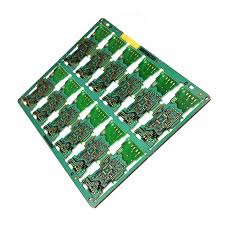
How Does Panelization Optimize PCB SMT Assembly Processes?
If a V-groove is used, it is recommended that a small percentage of the original PCB thickness be left behind after depanelization to provide a strong base for the breakout boards. Moreover, the traces and planes should be left with sufficient clearance to prevent stress fractures during the breakout process. It is also advisable to add at least two fiducial marks to the PCB, preferably on both sides of the board, so that the pick and place machine vision system can use them as a geometric reference.
Once the boards have been populated, they are sent back to the CM for final assembly. The CM can either mount the components on the PCBs by hand or using a punch or die cutter, depending on the project’s requirements. Both methods have their own advantages and drawbacks, but automation is typically preferred as it eliminates the need for a human to make minor errors due to fatigue and eyestrain. This also means that the CM can complete the assembly quickly, enabling it to meet deadlines and fulfill orders.
This is particularly important for high-volume production, where a short delay in manufacturing can cause significant delays in sales and revenue. It is also advantageous for manufacturers to have multiple projects underway at once, rather than waiting until the completion of a single project to begin shipping products. This also helps keep production costs low.
Track key quality metrics such as yield rates, defect rates, and mean time to repair (MTTR). Use this data to identify trends, implement corrective actions, and improve the overall assembly process.
