
Managed Security Service Differ From In-House Security
When deciding between in-house security and managed services, it’s important to consider control, expertise, cost, scalability, and flexibility. A combination of these factors may help your organization decide on the right solution for your unique business needs.
As the cybercriminal underground grows, it’s more challenging than ever to ensure your company’s security posture is robust enough to withstand threats. Managing your cybersecurity internally often involves stitching together a host of different tools and technologies, each of which is expensive and requires significant ongoing maintenance. managed cybersecurity services offer the benefits of a complete, unified defense at an affordable price.
In addition to their streamlined technology and services, MSSPs typically have dedicated teams of experts that monitor your network around the clock for threats. They stay updated on the latest IT trends, cyber attacks and best practices. This expertise isn’t always available in-house and can be hard for small businesses to maintain on their own.
The risk of cyberattacks is a constant threat for businesses, no matter their industry or size. But it can be particularly difficult to protect against attacks in high-risk industries such as the financial, healthcare, legal and educational sectors. Because these companies have to comply with more rigorous regulations and handle sensitive customer data, they’re a target for sophisticated hackers. Managed security services can provide guidance and protection to keep you ahead of the game, even in the most high-risk environments.
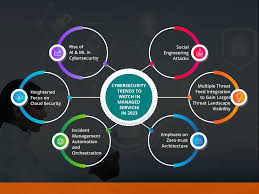
How Does a Managed Security Service Differ From In-House Security?
In-house teams require substantial investment in hiring, training, and infrastructure to operate effectively. By contrast, managed services can be purchased on a subscription basis, saving you the upfront costs associated with in-house security. Moreover, the monthly cost of a subscription can be easier to budget for and more predictable than the expenses of hiring an in-house team.
One of the most significant differences between an MSSP and an in-house security team is their focus on safety. An in-house team must also worry about ensuring that information systems are available to employees and customers, which creates the potential for data exposure and privacy issues. An MSSP’s sole mission is to reduce attack opportunities, which can be an advantage for some businesses.
As the number of attacks continues to rise, a growing number of organizations are recognizing that managed security services can help them improve their security posture. With a wide range of service offerings and 24/7 monitoring, an MSSP can bolster existing IT teams or provide them with the expertise and resources they need to secure their business. In the digital age, having unwavering, effective security is essential to achieving success.
managed cybersecurity services refer to the outsourcing of an organization’s cybersecurity functions to a third-party service provider. These providers are responsible for monitoring, managing, and improving an organization’s security infrastructure. The goal is to protect sensitive data, ensure business continuity, and mitigate risks from cyberattacks, malware, and other online threats.
