
printed circuit board assembly manufacturer
The concept of folding a printed circuit board (PCB) assembly manufacturer raises intriguing questions about flexibility and adaptability in modern electronics manufacturing. Traditionally, PCB assembly processes involve rigid substrates and fixed assembly methods. However, recent advancements in flexible electronics and manufacturing techniques have sparked interest in the possibility of “folding” PCB assembly manufacturing to create innovative solutions for various applications.
Flexibility in PCB design and fabrication has become increasingly important in fields such as wearable technology, flexible displays, and Internet of Things (IoT) devices. Flexible PCBs, also known as flex circuits, are designed to bend, twist, and conform to irregular shapes, offering greater design freedom and versatility compared to traditional rigid PCBs. Flex circuits consist of flexible substrate materials such as polyimide or polyester, along with conductive traces and components mounted on or embedded within the flexible substrate.
One approach to “folding” printed circuit board assembly manufacturer involves the use of flexible or bendable substrates that can be folded or manipulated into desired shapes during assembly. These flexible substrates allow for the creation of compact and lightweight electronic devices with unconventional form factors. By folding or bending the flexible substrate, manufacturers can achieve space-saving designs, reduce material waste, and improve the overall ergonomics and aesthetics of electronic products.
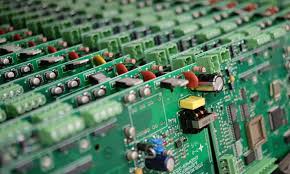
Can printed circuit board assembly manufacturer be folded?
Furthermore, advancements in additive manufacturing technologies such as 3D printing offer opportunities to explore novel approaches to folded PCB assembly manufacturing. Additive manufacturing enables the fabrication of complex geometries and intricate structures with high precision and customization. By integrating additive manufacturing techniques with flexible substrates and conductive materials, manufacturers can explore innovative methods for creating foldable electronic devices with unique functionalities and features.
Moreover, the emergence of flexible hybrid electronics (FHE) combines the benefits of flexible substrates with the integration of traditional rigid components and semiconductor devices. FHE enables the creation of hybrid systems that leverage the strengths of both flexible and rigid electronics, allowing for seamless integration of sensors, actuators, and microcontrollers into flexible assemblies. By incorporating rigid components into flexible substrates, manufacturers can enhance the functionality, durability, and performance of foldable electronic devices.
However, several challenges must be addressed to realize the potential of folded PCB assembly manufacturing. One significant consideration is the reliability and durability of foldable electronic devices over time. Flex circuits and flexible substrates must withstand repeated bending, folding, and mechanical stress without compromising electrical performance or causing premature failure. Additionally, assembly processes and materials must be optimized to ensure consistent quality and reliability in folded PCB assemblies.
Furthermore, design considerations such as component placement, routing, and interconnects become more complex in foldable electronic devices. Manufacturers must carefully design PCB layouts and assembly processes to accommodate folding or bending while maintaining electrical connectivity and functionality. Advanced design tools and simulation techniques can aid in optimizing foldable PCB designs and predicting the behavior of flexible assemblies under different operating conditions.
In conclusion, while the concept of folding PCB assembly manufacturing presents exciting possibilities for innovation and design flexibility, several technical and practical challenges must be overcome to realize its full potential. Advances in flexible substrates, additive manufacturing, and hybrid electronics offer promising avenues for exploring new approaches to foldable electronic devices. With continued research and development, folded PCB assembly manufacturing could revolutionize the way we design, fabricate, and interact with electronic products in the future.
