
PCB flex rigid boards be waterproofed
Rigid-flex circuit boards are used in a wide range of electronic products from consumer electronics to aerospace, military, and medical devices. The flexibility of these circuit boards allows them to be molded and bent during installation or operation, and this can add significant value to the finished product. The design and manufacturing of these complex products require careful planning, and there are a number of factors that must be taken into account. For example, the materials chosen for the rigid and flexible sections must have similar thermal expansion coefficients to prevent mismatching that can lead to stress failure. Also, signal integrity and electromagnetic interference (EMI) in the flex section must be maintained to avoid quality problems.
A good pcb flex rigid design is one that has a smooth transition between the rigid and flexible sections of the board. This is important for signal integrity and EMI, as well as for mechanical stress reduction. Abrupt changes between the width of wide and narrow traces can cause stress points, which may break the conductors or damage the circuit board. The best way to reduce these stress points is to use fillets or a gradual transition between the traces.
The transition between the rigid and flex sections of the board is also an important area to consider when waterproofing PCBs. This transition area must be large enough to allow the circuit board to flex without stressing conductors or damaging the joints or adhesives. Manufacturers usually recommend a transition zone that is about 40-60mils away from the edges of the board. Vias, plated through holes and special copper features should be kept out of this zone to avoid mechanical stresses or damage during the fabrication process.
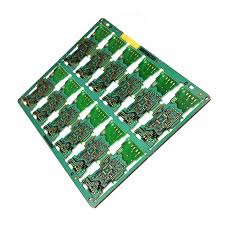
Can PCB flex rigid boards be waterproofed?
Another issue that must be considered when designing a PCB flex rigid is the bend ratio, or how much the PCB can be bent before it will fail. This ratio is defined by the manufacturer, and it depends on the intended dynamic bending of the PCB. A PCB that will only be bended once during assembly should have a much lower bend radius than one that is going to be flexed repeatedly in a dynamic application.
A standard fabrication process is to bake the PCB before soldering, which removes any moisture entrapped in the dielectric. However, it’s still important to plan for the possibility of moisture or delamination. The temperature of the soldering process can cause entrapped moisture to boil, which can cause severe delamination or even blow up the entire board. For this reason, it’s important to minimize the amount of time between baking and the subsequent soldering process.
To help mitigate these risks, manufacturers use protective beads made of silicones or hot-melt glues or epoxy resin on flex-to-rigid joints and interfaces. These add a physical reinforcement to the fulcrum of the joint and keep it from fatigue or cracking over time, especially in dynamic applications where the flex-to-rigid join may move under stress. This is also a cost-effective solution to the problem of water retention and corrosion.
